วันพฤหัสบดีที่ 28 กุมภาพันธ์ พ.ศ. 2556

[rael-science] Carnivorous Plants Glow to Attract Prey‏


~~~~~~~~~~~~~~~~~~~~~~~~~~~~~~~~~~~~~~~~~~~~~~~~~~~~~~~~~~~~~~~~
The Raelian Movement
for those who are not afraid of the future : http://www.rael.org   
~~~~~~~~~~~~~~~~~~~~~~~~~~~~~~~~~~~~~~~~~~~~~~~~~~~~~~~~~~~~~~~~

Source: http://newswatch.nationalgeographic.com/2013/02/25/carnivorous-plants-glow/

Carnivorous plants have an arsenal of tricks to entice insects into their clutches. These predatory plants have been known to use bright colors, delicious nectars, and appealing smells to make quick meals of the bugs that come to investigate—but no one knew they could also glow a bright blue.
carnivorous plant picture
The pitcher plant Nepenthes khasiana glows blue. Photograph courtesy Rajani Kurup, Anil J. Johnson, Sreethu Sankar, and Sabulal Baby
The flesh-eating flora have special cells that help them generate an ultraviolet hue, according to a new study published in the journal Plant BiologyThough invisible to the unaided human eye, the fluorescence is quite alluring to an inquisitive insect. (See pictures of killer plants.)
“To the best of our knowledge, this is the most distinct fluorescent emission found in the plant kingdom,” said study author Sabulal Baby, a plant biologist at the Jawaharlal Nehru Tropical Botanic Garden and Research Institute in India.
The glow is actually a survival technique: Carnivorous plants most often grow in nutrient-deficient soils and have to catch and kill bugs to supplement their poor diets.
Like Moths to a… Glow Stick
The plants’ light is emitted as an ultraviolet wavelength tailored to appeal to potential prey, including insects and other arthropods, the group that includes crustaceans, insects, and spiders. Insects often can see wavelengths that emphasize food sources.
For example, research suggests that honeybee eyes have evolved to pick out the brightest—and hopefully most nectar-rich—flowers.
carnivorous plant picture
The plant Sarracenia purpurea glows in UV light. Photograph courtesy Rajani Kurup, Anil J. Johnson, Sreethu Sankar, and Sabulal Baby
To an insect, the carnivorous plant’s glow probably looks like a bonfire at night. But to people looking at the plant under a black light, it probably looks something like a glow stick.
“In normal light, humans are not going to see this,” Baby said. “In the scale of a small ant, this could be a very clear light to them.” (Also see: “Glowing Animals: Beasts Shining for Science.”)
Fatal Attraction
Baby and his team examined four major types of carnivorous plants: pitfall traps, flypaper traps, snap traps, and bladder traps. Pitfall traps use pools of water or nectar to drown victims, while flypaper traps secrete sticky substances to snag a live snack.
Snap traps make some of the fastest movements in the plant kingdom, rapidly closing around prey, and bladder traps suck in prey using an internal vacuum. (Related: Tentacled, Carnivorous Plants Catapult Prey Into Traps.”)
Only the pitfall traps Nepenthes and Sarracenia and the snap trap Dionaea muscipula generated the distinct blue emissions, which turned out to be important to the plants’ survival. For instance, when scientists blacked out the ultraviolet light, the predators were less likely to attract insects. (Also see “Spiders, Carnivorous Plants Compete for Food—A First.”)

pitcher plant picture
The pitcher plant Nepenthes khasiana is seen in white light (left) and ultraviolet. Photograph courtesy Rajani Kurup, Anil J. Johnson, Sreethu Sankar, and Sabulal Baby
Though the research is incomplete, Baby also suspects that small animals like tree shrews and rats can also see the blue hue, enticing them to drink the plants’ sweet nectar. In the process, these animals drop fecal matter inside the plant, which becomes another good source of nutrients.
“The fluorescents are a very important attractant of insects, arthropods, and small animals,” he said.
Go With the Glow
Pitfall traps and snap traps aren’t the only plants to use ultraviolet frequencies. There are many species whose molecular makeup give them the ability to glow, said Howard Berg, a plant-cell biologist and the director of the Integrated Microscopy facility at the Donald Danforth Plant Science Center in Missouri.
“They have a chemical structure called conjugated double bond, and they have the ability to absorb light and re-emit it,” he said.
pitcher plant fluids picture
Fluids from a pitcher plant in the Nepenthes species fluoresce. Photograph courtesy Rajani Kurup, Anil J. Johnson, Sreethu Sankar, and Sabulal Baby
Berg added that the finding may even aid in future breakthroughs. Fluorescent jellyfish proteins are attached to specific markers, allowing researchers to study, for example, how cancer cells spread. The carnivorous plant’s glowing cells could potentially provide a new tracking method.
“It’s like a luggage tag,” Berg said. “You can use that as a locator. It’s really cool.”
What’s more likely, though, is the development of the ultimate bug zapper, study author Baby said.
The ultraviolet glow could work in tandem with an electric current to zap unsuspecting insects. The future of pest control—just go with the glow.
-- 
-- 
~~~~~~~~~~~~~~~~~~~~~~~~~~~~~~~~~~~~~~~~~~~~~~~~~~~~~~~~~~~~~
"Ethics" is simply a last-gasp attempt by deist conservatives and
orthodox dogmatics to keep humanity in ignorance and obscurantism,
through the well tried fermentation of fear, the fear of science and
new technologies.
 
There is nothing glorious about what our ancestors call history, 
it is simply a succession of mistakes, intolerances and violations.
 
On the contrary, let us embrace Science and the new technologies
unfettered, for it is these which will liberate mankind from the
myth of god, and free us from our age old fears, from disease,
death and the sweat of labour.
 
Rael
~~~~~~~~~~~~~~~~~~~~~~~~~~~~~~~~~~~~~~~~~~~~~~~~~~~~~~~~~~~~~~
 
Tell your friends that they can subscribe to this list by sending an email to:
subscribe@rael-science.org
- - -

[rael-science] Future of relationships: monogamy vs. promiscuity; the winner is…‏


~~~~~~~~~~~~~~~~~~~~~~~~~~~~~~~~~~~~~~~~~~~~~~~~~~~~~~~~~~~~~~~~
The Raelian Movement
for those who are not afraid of the future : http://www.rael.org   
~~~~~~~~~~~~~~~~~~~~~~~~~~~~~~~~~~~~~~~~~~~~~~~~~~~~~~~~~~~~~~~~

Source: http://ieet.org/index.php/IEET/more/pelletier2013

Future of relationships: monogamy vs. promiscuity; the winner is…
Feb 26, 2013

There’s a pervasive notion that monogamous relationships are the end-all-be-all – the default pact in human couplings that keep the fabric of society from being torn apart. But growing numbers of scientists believe monogamy is not our biological default; and may not even represent the best road to happiness.
Nearly all mammalian species demonstrate sexual promiscuity. Even mate-for-life prairie voles, the animal kingdom's poster child of monogamous relationships, produce pups from different fathers twenty percent of the time. Moreover, for humans, historians say, promiscuous behavior is not new at all.
Anthropologists have uncovered clues to how our Paleolithic ancestors lived. Before the advent of agriculture, humans faced a short, brutal lifespan. Some survived to age 50, but most died young or at birth with average life expectancy in the 30-to-40 range.
With such a short lifespan, ancestral children were likely to experiment with sex by age six. Most couples lived in temporary relationships, and being unfaithful was common for these cave dwellers.
When our forbears found themselves in an unhappy situation, they simply walked away and found another cave. Scientists believe that hunter-gatherers had sex mostly for fun, not just to reproduce.
Research professor at Rutgers UniversityHelen Fisher, who has written five books on the future of human sex, love, and relationships, says that marriage has changed more in the last 100 years than the previous 10,000, and it will change more in the next 20 years than the past 100!
We're shedding traditions that have survived since our culture began 10,000 years ago, Fisher says, and it appears we're returning to the ancient sex and romance practices of our hunter-gatherer days.
Concepts such as, 'till death do us part, a woman's place is in the home, and men as the primary wage earner, began disappearing in the last half of the 20th century. Relationships are now undergoing radical changes. Divorce is viewed more as a solution than shame; working-women are the norm; living together without marriage is gaining popularity; and some states have even legalized same-sex weddings.
In addition, our concept of infidelity is also changing. Some married couples agree that it's OK to have brief sexual encounters when they travel separately; others sustain long-term adulterous relationships with their spouse' approval. Moreover, recent studies have shown that relationships like these with less pressure on 'being faithful' are more stress-free for both participants, leading to happier lives.
Internet dating wields its impact on relationships too. Matching people with great partners is getting so efficient, and the process so enjoyable, that marriage itself may one day become obsolete.
As we wind through the 21st Century, new relationships will challenge many of our traditions and social policies. Houston futurist Sandy Burchsted, who recently spoke at a World Future Society conference, believes that in the future, most people will marry at least four times and experience extramarital affairs with little public censure. Marriage will be considered an evolutionary process, not a one-time-only event.
It may be time to rethink monogamy, especially given the way that the world has politicized the concept of marriage. As prairie voles aren't "pure as the driven snow," there is also no biological evidence to suggest that human beings are naturally monogamous. We may be culturally and socially encouraged to be faithful, but it is unclear how much that sway really has over our biology.
Some believe a monogamous relationship is the best way to achieve happiness; but a University of Michigan study says not so fast. Researchers found non-monogamous relationships reported higher levels of satisfaction and intimacy, and less jealousy than experienced by monogamous pairings.
Today, we live in a sea of technologies that reshape our lives. To bond is human and drives to fall in love are embedded in our nature. With new sex and romance aids, such as Viagra and estrogen replacement, and science providing us with longer healthier lifespans, we have the opportunity to create a more fulfilling partnership than at any other time in history. Welcome to the future!
-- 
-- 
~~~~~~~~~~~~~~~~~~~~~~~~~~~~~~~~~~~~~~~~~~~~~~~~~~~~~~~~~~~~~
"Ethics" is simply a last-gasp attempt by deist conservatives and
orthodox dogmatics to keep humanity in ignorance and obscurantism,
through the well tried fermentation of fear, the fear of science and
new technologies.
 
There is nothing glorious about what our ancestors call history, 
it is simply a succession of mistakes, intolerances and violations.
 
On the contrary, let us embrace Science and the new technologies
unfettered, for it is these which will liberate mankind from the
myth of god, and free us from our age old fears, from disease,
death and the sweat of labour.
 
Rael
~~~~~~~~~~~~~~~~~~~~~~~~~~~~~~~~~~~~~~~~~~~~~~~~~~~~~~~~~~~~~~
 
Tell your friends that they can subscribe to this list by sending an email to:
subscribe@rael-science.org
- - -

[rael-science] Brain Cells Can Outlive the Body‏


~~~~~~~~~~~~~~~~~~~~~~~~~~~~~~~~~~~~~~~~~~~~~~~~~~~~~~~~~~~~~~~~
The Raelian Movement
for those who are not afraid of the future : http://www.rael.org   
~~~~~~~~~~~~~~~~~~~~~~~~~~~~~~~~~~~~~~~~~~~~~~~~~~~~~~~~~~~~~~~~

Source: http://www.livescience.com/27423-brain-cells-outlive-bodies.html

Brain Cells Can Outlive the Body

25 February 2013
Brain cells can live at least twice as long as the organisms in which they reside, according to new research.
The study, published today (Feb. 25) in the journal Proceedings of the National Academy of Sciences, found that mouse neurons, or brain cells, implanted into rats can survive with the rats into old age, twice as long as the life span of the original mice.
The findings are good news for life extension enthusiasts.
"We are slowly but continuously prolonging the life of humans," said study co-author Dr. Lorenzo Magrassi, a neurosurgeon at the University of Pavia in Italy.
So if the human life span could be stretched to 160 years, "then you are not going to lose your neurons, because your neurons do not have a fixed lifetime."
Long-lived cells
While most of the cells in the human body are being constantly replaced, humans are born with almost all the neurons they will ever have. 
Magrassi and his colleagues wanted to know whether neurons could outlive the organisms in which they live (barring degenerative diseases like Alzheimer's).
To do so, the researchers took neurons from mice and implanted them into the brains of about 60 rat fetuses.
The team then let the rats live their entire lives, euthanizing them when they were moribund and unlikely to survive for more than two days, and then inspected their brains. The life span of the mice was only about 18 months, while the rats typically lived twice as long.
The rats were found to be completely normal (though not any smarter), without any signs of neurological problems at the end of their lives.
And the neurons that had been transplanted from mice were still alive when the rats died. That means it's possible the cells could have survived even longer if they were transplanted into a longer-livedspecies.
Life extension
The findings suggest that our brain cells won't fail before our bodies do.
"Think what a terrible thing it could be if you survive your own brain," Magrassi told LiveScience.
While the findings were done in rats, not humans, they could also have implications for neuronal transplants that could be used for degenerative diseases like Alzheimer's disease or Parkinson's disease, Magrassi said.
But just because brain cells may be able to live indefinitely doesn't mean humans could live forever.
Aging is dependent on more than the life span of all the individual parts in the body, and scientists still don't understand exactly what causes people to age, Magrassi said.
-- 
-- 
~~~~~~~~~~~~~~~~~~~~~~~~~~~~~~~~~~~~~~~~~~~~~~~~~~~~~~~~~~~~~
"Ethics" is simply a last-gasp attempt by deist conservatives and
orthodox dogmatics to keep humanity in ignorance and obscurantism,
through the well tried fermentation of fear, the fear of science and
new technologies.
 
There is nothing glorious about what our ancestors call history, 
it is simply a succession of mistakes, intolerances and violations.
 
On the contrary, let us embrace Science and the new technologies
unfettered, for it is these which will liberate mankind from the
myth of god, and free us from our age old fears, from disease,
death and the sweat of labour.
 
Rael
~~~~~~~~~~~~~~~~~~~~~~~~~~~~~~~~~~~~~~~~~~~~~~~~~~~~~~~~~~~~~~
 
Tell your friends that they can subscribe to this list by sending an email to:
subscribe@rael-science.org
- - -

[rael-science] Researchers engineer human kidney cells‏


~~~~~~~~~~~~~~~~~~~~~~~~~~~~~~~~~~~~~~~~~~~~~~~~~~~~~~~~~~~~~~~~
The Raelian Movement
for those who are not afraid of the future : http://www.rael.org   
~~~~~~~~~~~~~~~~~~~~~~~~~~~~~~~~~~~~~~~~~~~~~~~~~~~~~~~~~~~~~~~~

Source: http://en-maktoob.news.yahoo.com/researchers-engineer-human-kidney-cells-044318971.html

Researchers engineer human kidney cells

Feb 22, 2013

Sydney, Feb 22 (IANS) Researchers have engineered human kidney cells from human embryonic stem cells, which could have applications in regenerative medicine, toxicology and modelling diseases.
Researchers from the Institute of Bioengineering and Nanotechnology (IBN) have successfully generated the renal cells under artificial conditions in the lab.
"In particular, we are interested in applying our technology to develop predictive in vitro drug testing and renal toxicity models as alternatives to animal testing," Jackie Y. Ying, executive director of IBN, was quoted as saying in a statement from the institute.
IBN team leader and principal research scientist Daniele Zink said: "The kidney is a major target organ for drug-induced toxic effects. Therefore, it is important for pharmaceutical companies to find out early in the development phase whether their drugs would cause nephrotoxicity in humans."
At present, human kidney cells are extracted directly from human kidney samples. However, this method is not efficient because such samples are limited, and the extracted cells die after a few cell divisions in the petri dish.
An alternative approach is to use human renal cell lines that have been rendered immortal, that is, they can be reproduced indefinitely in the lab. However, such cells may not be used in many applications due to safety issues.
The IBN technique, on the other hand, enables human embryonic stem cells to differentiate into renal proximal tubular-like cells. This particular kidney cell type plays an important role in kidney disease-related processes and drug clearance.
Results showed that the IBN lab generated cells were similar to the renal proximal tubular cells isolated from fresh human kidney samples. For example, they displayed very similar gene and protein expression patterns.
"We are also planning to modify our protocol in order to generate other renal cell types from stem cells," said Karthikeyan Narayanan, senior research scientist from IBN.
-- 
-- 
~~~~~~~~~~~~~~~~~~~~~~~~~~~~~~~~~~~~~~~~~~~~~~~~~~~~~~~~~~~~~
"Ethics" is simply a last-gasp attempt by deist conservatives and
orthodox dogmatics to keep humanity in ignorance and obscurantism,
through the well tried fermentation of fear, the fear of science and
new technologies.
 
There is nothing glorious about what our ancestors call history, 
it is simply a succession of mistakes, intolerances and violations.
 
On the contrary, let us embrace Science and the new technologies
unfettered, for it is these which will liberate mankind from the
myth of god, and free us from our age old fears, from disease,
death and the sweat of labour.
 
Rael
~~~~~~~~~~~~~~~~~~~~~~~~~~~~~~~~~~~~~~~~~~~~~~~~~~~~~~~~~~~~~~
 
Tell your friends that they can subscribe to this list by sending an email to:
subscribe@rael-science.org
- - -

[rael-science] Moments of Spirituality Can Induce Liberal Attitudes, Researchers Find‏


~~~~~~~~~~~~~~~~~~~~~~~~~~~~~~~~~~~~~~~~~~~~~~~~~~~~~~~~~~~~~~~~
The Raelian Movement
for those who are not afraid of the future : http://www.rael.org   
~~~~~~~~~~~~~~~~~~~~~~~~~~~~~~~~~~~~~~~~~~~~~~~~~~~~~~~~~~~~~~~~

Source: http://www.sciencedaily.com/releases/2013/02/130225131532.htm

Moments of Spirituality Can Induce Liberal Attitudes, Researchers Find

Feb. 25, 2013 — People become more politically liberal immediately after practising a spiritual exercise such as meditation, researchers at the University of Toronto have found.

"There's great overlap between religious beliefs and political orientations," says one of the study authors, Jordan Peterson of U of T's Department of Psychology. "We found that religious individuals tend to be more conservative and spiritual people tend to be more liberal. Inducing a spiritual experience through a guided meditation exercise led both liberals and conservatives to endorse more liberal political attitudes."
"While religiousness is characterized by devotion to a specific tradition, set of principles, or code of conduct, spirituality is associated with the direct experience of self-transcendence and the feeling that we're all connected," says lead author Jacob Hirsh of U of T's Rotman School of Management.
In three studies, the researchers -- Hirsh, Peterson and Megan Walberg, examined their participants' political views in relation to their religiousness and spirituality. In the first study, they asked 590 American participants whether they identified as Democrat or Republican. In the second study, they measured 703 participants' political orientations and support for the major American and Canadian political parties. The researchers confirmed that religiousness was associated with political conservatism, while spirituality was associated with political liberalism. These associations were in turn due to the common values underlying these orientations: conservatism and religiousness both emphasize the importance of tradition, while liberalism and spirituality both emphasize the importance of equality and social harmony.
In the third study, the researchers recruited 317 participants from the U.S. and asked half to complete a spiritual exercise consisting of a guided meditation video. Those who watched the video were asked to close their eyes and breathe deeply, imagining themselves in a natural setting and feeling connected to the environment. They were then asked about their political orientation and to rate how spiritual they felt. The researchers reported that, compared to those in the control group, participants who meditated felt significantly higher levels of spirituality and expressed more liberal political attitudes, including a reduced support for "tough on crime" policies and a preference for liberal political candidates.
"Spiritual experiences seem to make people feel more of a connection with others," says Hirsh. "The boundaries we normally maintain between ourselves and the world tend to dissolve during spiritual experiences. These feelings of self-transcendence make it easier to recognize that we are all part of the same system, promoting an inclusive and egalitarian mindset."
The researchers hope that these findings can not only advance our understanding of spirituality, but also help future political dialogue.
"The conservative part of religious belief has played an important role in holding cultures together and establishing common rules. The spiritual part, on the other hand, helps cultures renew themselves by adapting to changing circumstances," says Peterson. "Both right and left are necessary; it's not that either is correct, it's that the dialogue between them produces the best chance we have at getting the balance right. If people could understand that both sides have an important role to play in society, some of the unnecessary tension might be eliminated."
-- 
-- 
~~~~~~~~~~~~~~~~~~~~~~~~~~~~~~~~~~~~~~~~~~~~~~~~~~~~~~~~~~~~~
"Ethics" is simply a last-gasp attempt by deist conservatives and
orthodox dogmatics to keep humanity in ignorance and obscurantism,
through the well tried fermentation of fear, the fear of science and
new technologies.
 
There is nothing glorious about what our ancestors call history, 
it is simply a succession of mistakes, intolerances and violations.
 
On the contrary, let us embrace Science and the new technologies
unfettered, for it is these which will liberate mankind from the
myth of god, and free us from our age old fears, from disease,
death and the sweat of labour.
 
Rael
~~~~~~~~~~~~~~~~~~~~~~~~~~~~~~~~~~~~~~~~~~~~~~~~~~~~~~~~~~~~~~
 
Tell your friends that they can subscribe to this list by sending an email to:
subscribe@rael-science.org

[rael-science] How Dinosaurs Grew the World's Longest Necks‏


~~~~~~~~~~~~~~~~~~~~~~~~~~~~~~~~~~~~~~~~~~~~~~~~~~~~~~~~~~~~~~~~
The Raelian Movement
for those who are not afraid of the future : http://www.rael.org   
~~~~~~~~~~~~~~~~~~~~~~~~~~~~~~~~~~~~~~~~~~~~~~~~~~~~~~~~~~~~~~~~

Source: http://www.livescience.com/27376-how-dinosaurs-grew-longest-necks.html

How Dinosaurs Grew the World's Longest Necks

Date: 23 February 2013 
This life restoration shows the adult Brontomerus as a mother, protecting her baby from a predator by using her powerful thigh muscles to deliver a devastating kick.
  Plant-eating dinosaurs called sauropods had the longest necks in the animal kingdom. Here an adult Brontomerus mother.

How did the largest of all dinosaurs evolve necks longer than any other creature that has ever lived? One secret: mostly hollow neck bones, researchers say.
The largest creatures to ever walk the Earth were the long-necked, long-tailed dinosaurs known as thesauropods. These vegetarians had by far the longest necks of any known animal. The dinosaurs' necks reached up to 50 feet (15 meters) in length, six times longer than that of the current world-record holder, the giraffe, and at least five times longer than those of any other animal that has lived on land.
"They were really stupidly, absurdly oversized," said researcher Michael Taylor, a vertebrate paleontologist at the University of Bristol in England. "In our feeble, modern world, we're used to thinking of elephants as big, but sauropods reached 10 times the size elephants do. They were the size of walking whales."
Amazing necks
To find out how sauropod necks could get so long, scientists analyzed other long-necked creatures and compared sauropod anatomy with that of the dinosaurs' nearest living relatives, the birds and crocodilians.
"Extinct animals — and living animals, too, for that matter — are much more amazing than we realize," Taylor told LiveScience. "Time and again, people have proposed limits to possible animal sizes, like the five-meter (16-foot) wingspan that was supposed to be the limit for flying animals. And time and again, they've been blown away. We now know of flying pterosaurs with 10-meter (33-foot) wingspans. And these extremes are achieved by a startling array of anatomical innovations." [Image Gallery: 25 Amazing Ancient Beasts]
Among living animals, adult bull giraffes have the longest necks, capable of reaching about 8 feet (2.4 m) long. No other living creature exceeds half this length. For instance, ostriches typically have necks only about 3 feet (1 m) long.
When it comes to extinct animals, the largest land-living mammal of all time was the rhino-like creatureParaceratherium, which had a neck maybe 8.2 feet (2.5 m) long. The flying reptiles known as pterosaurs could also have surprisingly long necks, such as Arambourgiania, whose neck may have exceeded 10 feet (3 m).
The necks of the Loch Ness Monster-like marine reptiles known as plesiosaurs could reach an impressive 23 feet (7 m), probably because the water they lived in could support their weight. But these necks were still less than half the lengths of the longest-necked sauropods.
Sauropod secrets
In their study, Taylor and his colleagues found that the neck bones of sauropods possessed a number of traits that supported such long necks. For instance, air often made up 60 percent of these animals' necks, with some as light as birds' bones, making it easier to support long chains of the bones. The muscles, tendons and ligaments were also positioned around these vertebrae in a way that helped maximize leverage, making neck movements more efficient.
In addition, the dinosaurs' giant torsos and four-legged stances helped provide a stable platform for their necks. In contrast, giraffes have relatively small torsos, while ostriches have two-legged stances. [Image Gallery: Animals' Amazing Headgear]
Sauropods also had plenty of neck vertebrae, up to 19. In contrast, nearly all mammals have no more than seven, from mice to whales to giraffes, limiting how long their necks can get. (The only exceptions among mammals are sloths and aquatic mammals known as sirenians, such as manatees.)
Moreover, while pterosaur Arambourgiania had a relatively giant head with long, spear-like jaws that it likely used to help capture prey, sauropods had small, light heads that were easy to support. Thesedinosaurs did not chew their meals, lacking even cheeks to store food in their mouths; they merely swallowed it, letting their guts break it down.
"Sauropod heads are essentially all mouth. The jaw joint is at the very back of the skull, and they didn't have cheeks, so they came pretty close to having Pac Man-Cookie Monster flip-top heads," researcher Mathew Wedel at the Western University of Health Sciences in Pomona, Calif., told LiveScience.
"It's natural to wonder if the lack of chewing didn't, well, come back to bite them, in terms of digestiveefficiency. But some recent work on digestion in large animals has shown that after about 3 days, animals have gotten all the nutrition they can from their food, regardless of particle size.
"And sauropods were so big that the food would have spent that long going through them anyway," Wedel said. "They could stop chewing entirely, with no loss of digestive efficiency."
What's a long neck good for?
Furthermore, sauropods and other dinosaurs probably could breathe like birds, drawing fresh air through their lungs continuously, instead of having to breathe out before breathing in to fill their lungs with fresh air like mammals do. This may have helped sauropods get vital oxygen down their long necks to their lungs.
sauropod neck lengths to scale
  Sauropods' necks reached up to 50 feet (15 meters) in length, six times longer than that of the current world-record holder, the giraffe.
"The problem of breathing through a long tube is something that's very hard for mammals to do. Just try it with a length of garden hose," Taylor said.
As to why sauropods evolved such long necks, there are currently three theories. Some of the dinosaurs may have used their long necks to feed on high leaves, like giraffes do. Others may have used their necks to graze on large swaths of vegetation by sweeping the ground side to side like geese do. This helped them make the most out of every step, which would be a big deal for such heavy creatures.
Scientists have also suggested that long necks may have been sexually attractive, therefore driving the evolution of ever-longer necks; however, Taylor and his colleagues have found no evidence this was the case.
In the future, the researchers plan to delve even deeper into the mysteries of sauropod necks. For instance, Apatosaurus, formerly known as Brontosaurus, had "really sensationally strange neck vertebrae," Taylor said. The scientists suspect the necks of Apatosaurus were used for "combat between males — fighting over women, of course."
Taylor and Wedel detailed their findings online Feb. 12 in the journal PeerJ.
-- 
-- 
~~~~~~~~~~~~~~~~~~~~~~~~~~~~~~~~~~~~~~~~~~~~~~~~~~~~~~~~~~~~~
"Ethics" is simply a last-gasp attempt by deist conservatives and
orthodox dogmatics to keep humanity in ignorance and obscurantism,
through the well tried fermentation of fear, the fear of science and
new technologies.
 
There is nothing glorious about what our ancestors call history, 
it is simply a succession of mistakes, intolerances and violations.
 
On the contrary, let us embrace Science and the new technologies
unfettered, for it is these which will liberate mankind from the
myth of god, and free us from our age old fears, from disease,
death and the sweat of labour.
 
Rael
~~~~~~~~~~~~~~~~~~~~~~~~~~~~~~~~~~~~~~~~~~~~~~~~~~~~~~~~~~~~~~
 
Tell your friends that they can subscribe to this list by sending an email to:
subscribe@rael-science.org
- - -
[rael-science] Scientists Create Mice That Can’t Feel Cold‏


~~~~~~~~~~~~~~~~~~~~~~~~~~~~~~~~~~~~~~~~~~~~~~~~~~~~~~~~~~~~~~~~
The Raelian Movement
for those who are not afraid of the future : http://www.rael.org   
~~~~~~~~~~~~~~~~~~~~~~~~~~~~~~~~~~~~~~~~~~~~~~~~~~~~~~~~~~~~~~~~

Source: http://singularityhub.com/2013/02/25/scientists-create-mice-that-cant-feel-cold/

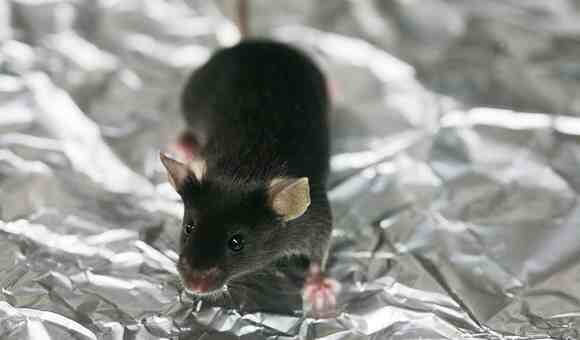
Scientists Create Mice That Can’t Feel Cold

Hate the cold? Always feel like the room’s chilly while others inexplicably seem nice and comfortably cozy warm? Here’s one extreme solution to take the chill off. Scientists created a group of mice that were incapable of feeling cold by killing off the neurons in the body whose specific job it is to transmit cold sensation from the skin to the brain. Rather than an attempt to create an X-men-like mutation, the study sheds light on how the nervous system transmits sensory information from the body to the brain and may help to develop more sophisticated pain medicines.
Our sensations are transmitted from our skin through different neurons that are fine-tuned for specific sensations, such as hot or cold, touch, or pain. Which sensation or sensations a neuron transmits is determined by the type of protein receptors it expresses. And while there are several types of receptors that respond to heat, it turns out that mammals have one main receptor for cold detection called TRPM8, part of the transient receptor potential (TRP; pronounced “trip”) family of proteins that act as molecular thermo-detectors.
To study how cold is processed by the nervous system, the scientists used a toxin to kill all TRPM8-containing neurons in the mice. To test how the absence of the neurons affected their ability to detect cold, the mice were placed on a surface that ranged from 0 degrees Celsius at one end to 50 degrees at the other (32 to 122 degrees Fahrenheit) where they were allowed to move freely. Normal mice with all their neurons, not liking it too hot or too cold but just right, would tend to end up at an area where the temperature was a cozy 30 degrees Celsius (86 degrees Fahrenheit). The mice without TRPM8 neurons, however, avoided the hot area of the surface but did not avoid the colder areas, even areas near freezing where the surface should have been painful. Without the proper neurons, the mice couldn’t detect the cold. In another set of experiments, the scientists showed that cold no longer relieved pain in the TRPM8-lacking mice. Importantly, the mice’s ability to sense touch, heat and body position remained normal.
The study was published in the February 13 issue of the Journal of Neuroscience. Led by David McKemy, associate professor of neurobiology at the University of Southern California Dornsife College of Letters, Arts and Sciences, the study was motivated by a desire to disentangle how different types of sensory information – hot, cold, pain – are processed by the neurons under our skin and then later by higher centers in the brain. McKemy hopes the research will help develop more nuanced pain treatments. “The problem with pain drugs now is that they typically just reduce inflammation, which is just one potential cause of pain,” he said in a press release, “or they knock out all sensation, which often is not desirable. One of our goals is to pave the way for medications that address the pain directly in a way that does not leave the patients completely numb.”
It’s probably up in the brain’s higher processing centers where the explanation for bizarre cases like Wim Hof and Lynne Cox exist. Hof, aka “The Ice Man,” is a Dutch man with an extraordinary ability to control his body’s normal responses with his mind. It allowed him to trek up Mount Everest wearing only shorts. “It was easy,” he says. And Cox, who crossed the English Channel in record time and, in 1987, became the first person to swim across the Bering Strait through near freezing waters (less than 4 degrees Celsius, 38 degrees Fahrenheit). Scientists continue to study these X-men-like phenoms, but with few new insights. Scientists can only guess that there’s some strange wiring in Hof’s brain that explains his ability to control, not only his own body temperature but his autonomic nervous and immune systems as well.
Pain is a good thing, it tells us when we’re likely to be injured and so helps us to avoid it. Chronic pain, however, serves no useful purpose and can drastically reduce a person’s quality of life. By studying pain at the extremities, as in the current study, and the higher brain centers of people with extraordinary abilities to suppress pain, we maximize the chances of finding pain relief for everyone.
-- 
-- 
~~~~~~~~~~~~~~~~~~~~~~~~~~~~~~~~~~~~~~~~~~~~~~~~~~~~~~~~~~~~~
"Ethics" is simply a last-gasp attempt by deist conservatives and
orthodox dogmatics to keep humanity in ignorance and obscurantism,
through the well tried fermentation of fear, the fear of science and
new technologies.
 
There is nothing glorious about what our ancestors call history, 
it is simply a succession of mistakes, intolerances and violations.
 
On the contrary, let us embrace Science and the new technologies
unfettered, for it is these which will liberate mankind from the
myth of god, and free us from our age old fears, from disease,
death and the sweat of labour.
 
Rael
~~~~~~~~~~~~~~~~~~~~~~~~~~~~~~~~~~~~~~~~~~~~~~~~~~~~~~~~~~~~~~
 
Tell your friends that they can subscribe to this list by sending an email to:
subscribe@rael-science.org
- - -